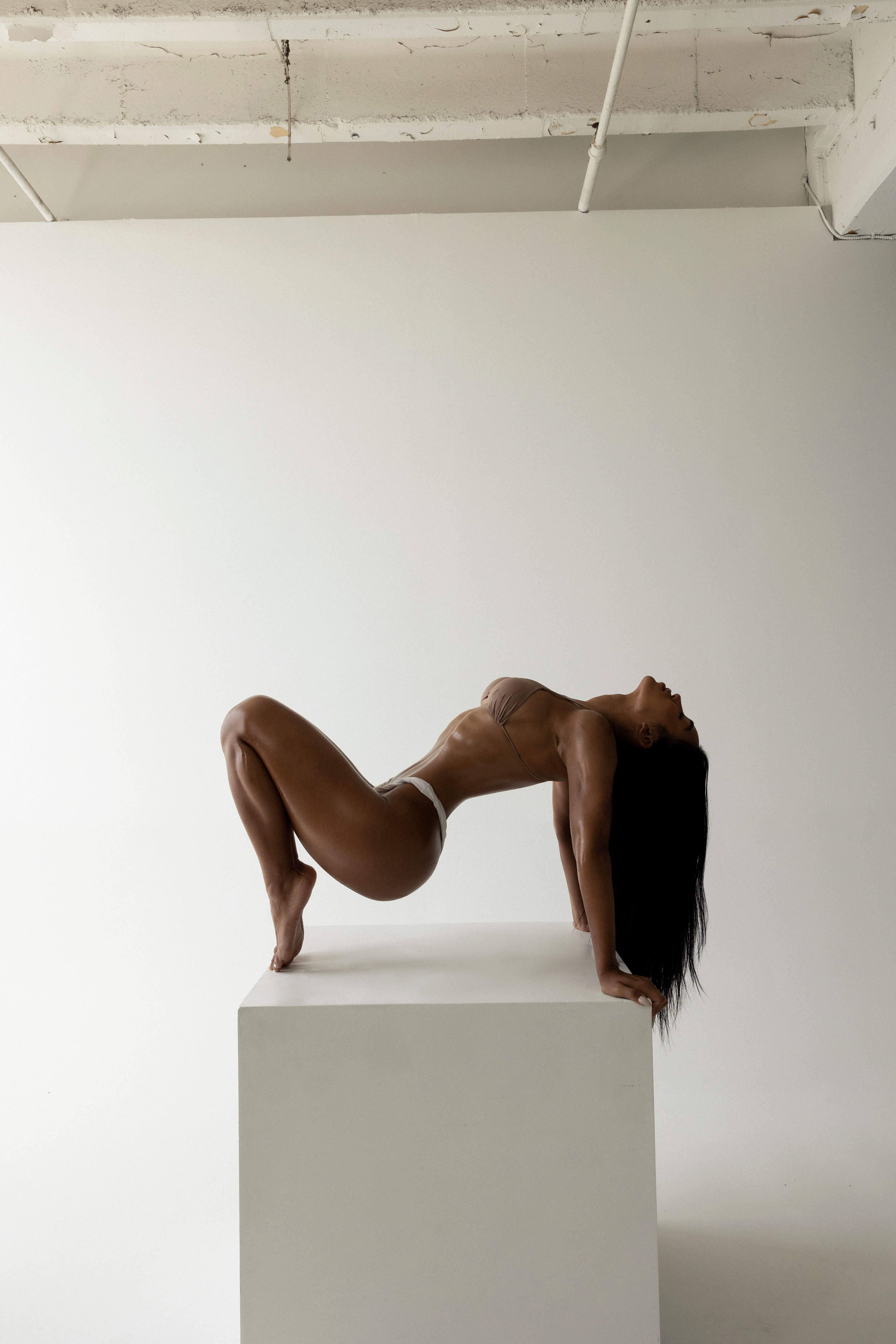
The fitness industry has long relied on a familiar visual language — idealized bodies, predictable angles, and repetitive aesthetics. But today, a new generation of creators is beginning to challenge and reshape that narrative. One of them is photographer Valeriia Guznenkova, whose work is increasingly becoming a reference point for athletes, coaches, and photographers alike.
We spoke with Valeriia about the body, perception, and why modern fitness demands a new visual approach.
— Valeriia, your path didn’t begin with photography, but with fitness. How did that shape your perspective?
— Completely. I didn’t come into photography through the camera — I came through the body.
For years, I was deeply involved in strength training. I understood how the body changes, how it responds, how much work goes into shaping it. And at the same time, I kept seeing a disconnect between that reality and how it was being visually represented.
I knew how much effort was behind those results. But in images, that effort often disappeared. It either turned into something overly sexualized, or the actual structure of the body was simply lost.
At some point, it became clear to me: the problem wasn’t the body — it was the way it was being photographed.
— What do you think is missing in the visual culture of fitness today?
— Understanding.
A lot of what we still see is built on outdated ideas. The body is treated either as something to display or something to decorate. But the body is neither. It’s structure. It’s work. It’s form.
And if a photographer doesn’t understand how to construct that form within the frame, no amount of retouching will fix it.
I believe the fitness industry is at a point where it needs a more precise, more intentional visual language.
— Your work is often described as sculptural. Is that intentional?
— Yes, because the body is a sculpture.
But the key difference is that this sculpture is not created afterward. It happens in real time. Through posing, through angles, through tension, through control.
I don’t approach the body as something that needs correction. I approach it as a form that needs to be constructed accurately.
— You work a lot with women in the fitness space. Why do they choose you?
— Because they want their work to be seen.
Fitness is not just about appearance. It’s discipline, time, sacrifice. It’s a process. And when someone goes through that, they don’t want just a “beautiful image.” They want something that reflects what they’ve built.
That’s what I give them.
And maybe even more importantly — I give them a different experience of seeing themselves. Not as something to be judged, but as something that already holds value.
— Would you say you’re shaping a new visual standard in fitness?
— I would say I’m part of that shift.
I see photographers starting to think differently — about composition, about posing, about structure. I see women becoming more selective about how they want to be photographed.
And that’s a good sign. Because visual culture always shapes how we see ourselves.
— What matters most to you in your work right now?
— Precision.
Precision in how I see the body. Precision in how I build the image.
And responsibility. Because an image is never just an image. It becomes a way a person sees themselves.
And when we’re talking about the body, about strength — that responsibility becomes even greater.
Valeriia Guznenkova’s work goes beyond photography. It reflects a shift in visual culture — one where the body is no longer treated as an object, but understood as form, structure, and lived experience.
And it is precisely this approach that may define the next stage of the fitness industry’s visual evolution.
https://byguznenkova.com/
Author: Olivia Katz
Date: September 14, 2024